
Neural Habitats: Designing Websites That Evolve With Each Visitor
The Web Is About to Get Wild In 2025, static websites feel like museum pieces. Even “personalized” pages — swapping banners or changing a hero image — are beginning to…
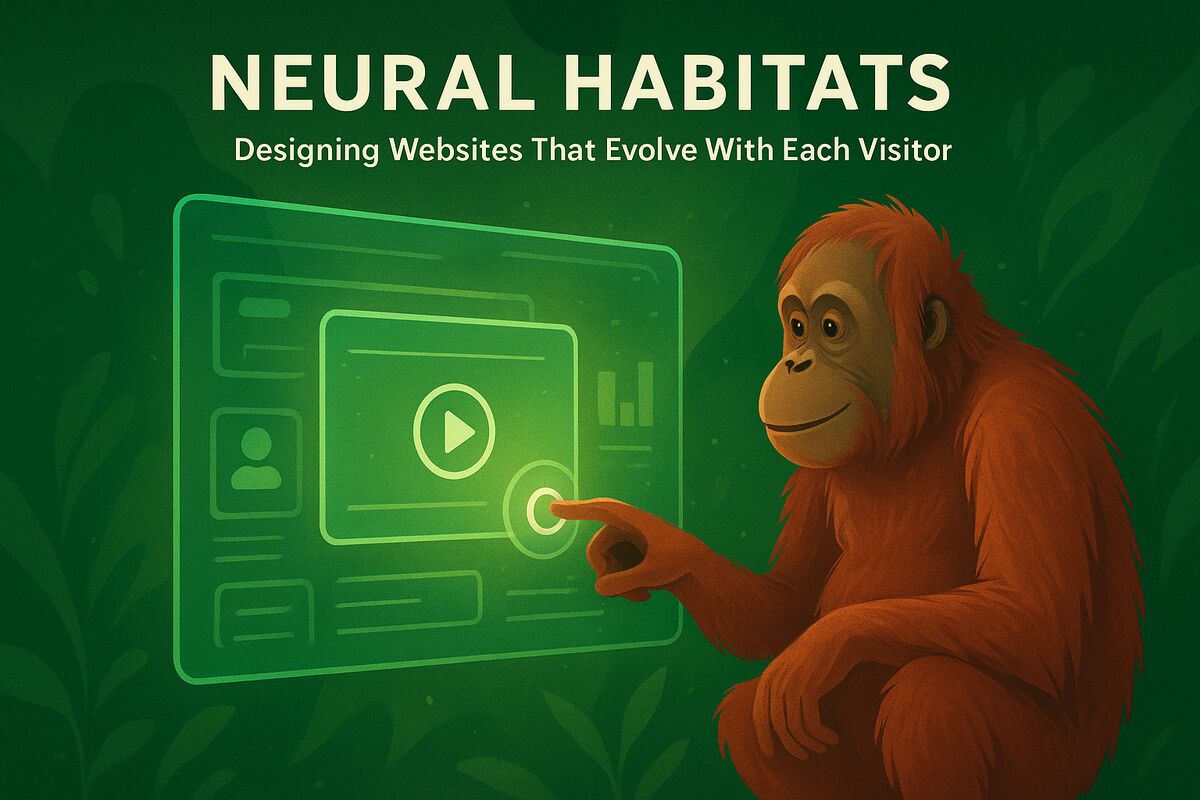
The Web Is About to Get Wild
In 2025, static websites feel like museum pieces. Even “personalized” pages — swapping banners or changing a hero image — are beginning to look outdated. The next frontier is here: websites that behave like living organisms, responding in real time to each visitor’s intent. We call them neural habitats.
Imagine a homepage that quietly tracks micro-gestures — how long you hover, which color palette you linger on, what words make your eyes pause — and then reorganizes itself, morphing its navigation, tone, and offers to suit you before you even click. This isn’t science fiction anymore; the tech stack already exists.
From Personalization to Adaptation
Traditional personalization = predefined variants (“if user is from X, show Y”). Neural habitats go deeper:
-
Live data ingestion: Combining analytics, AI, and behavioral cues.
-
Real-time morphing: Layout, copy, CTAs, and even pricing adapt on the fly.
-
Ecosystem logic: Pages compete and cooperate like species in an ecosystem, optimizing for attention and conversion.
Where personalization feels like a polite concierge, adaptation feels like a living space that senses and responds to you.
Why This Matters for Brands in 2025
-
Frictionless engagement: Visitors land on a page already attuned to their intent.
-
Radical relevance: Offers, content, and visuals match subconscious cues.
-
Loyalty through “aliveness”: When a site feels alive and attentive, visitors come back.
-
SEO boost: Lower bounce rates, higher dwell time, more natural link-sharing.
Brands adopting neural habitats early will build experiences competitors can’t easily copy.
The Technology Behind Neural Habitats
Think of it as an orchestra of tools:
-
Real-time analytics (heatmaps, gaze tracking, micro-scroll mapping).
-
Generative AI (copy, images, and layouts produced on demand).
-
Behavioral science engines (predictive modeling based on micro-behaviors).
-
Edge computing (split-second processing without lag).
Together, these create a digital environment that “breathes” with the user.
Designing Your Own Neural Habitat
If you’re considering this leap, start small:
-
Test micro-animations or dynamic CTAs first.
-
Introduce real-time recommendations beyond product lists.
-
Gradually deploy AI-driven layout shifts.
Then scale into a full neural habitat — a digital ecosystem tuned to every visitor.
Final Thoughts
We’ve entered an age where UX isn’t just designed; it’s alive. For brands ready to lead in 2025, neural habitats offer a once-in-a-decade opportunity to stand out. Build a website that behaves like a living organism, and your audience won’t just visit — they’ll explore, engage, and evolve with you.
More articles

Your Website Is Quietly Training Customers to Give Up
Your website could be losing potential customers through small but costly frustrations. Discover how digital friction affects navigation, contact forms, follow-ups and conversions—and how smarter website design and connected business systems can create a smoother customer experience.
Read article →
The UX Jungle: How Digital Ecosystems Compete (and Cooperate) Like Wildlife
The internet is a vast and thriving jungle. Every website, app, and platform is like a living organism, constantly competing for attention, resources, and survival—yet also forming surprising partnerships. Understanding…
Read article →
Digital DNA: How Your Brand’s Personality Shapes UX
Every brand has its own “Digital DNA” — a mix of tone, visuals, and subtle behaviors that make it feel alive online. While many businesses focus on features and functionality,…
Read article →